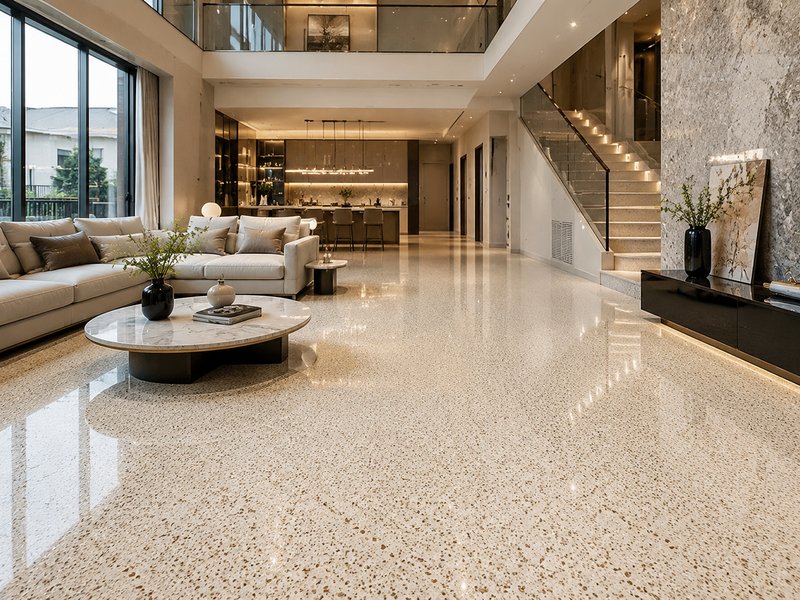
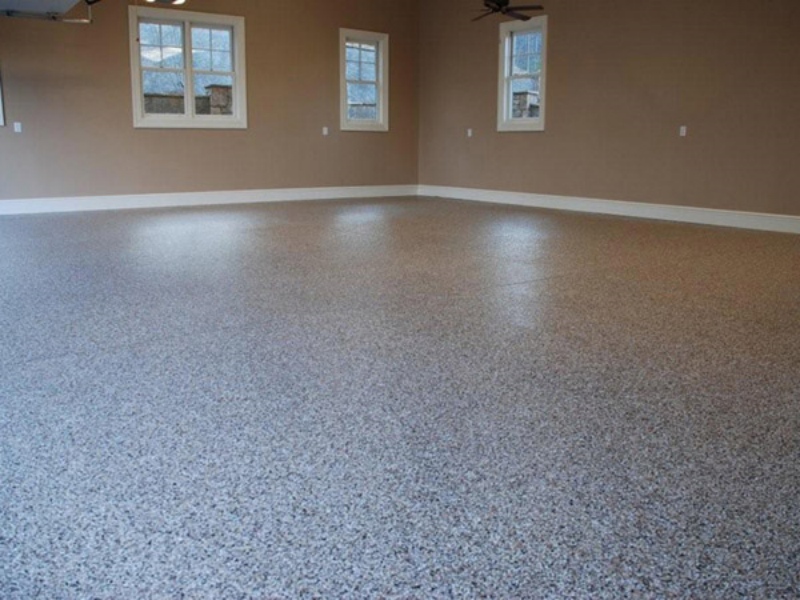
oil -based epoxy colored sand self-leveling floor paint

Home

oil -based epoxy colored sand self-leveling floor paint

  • Water-Based Epoxy Self-Leveling Floor Paint: Also Known As Liquid Marble & Liquid Terrazzo
    Water-Based Epoxy Self-Leveling Floor Paint: Also Known As Liquid Marble & Liquid Terrazzo
    Aug 16, 2026
    Water-based epoxy self-leveling coating is a two-component waterborne epoxy floor system mixed with fine colored quartz aggregates. When fully constructed, it forms an integrated seamless surface with natural stone texture. For marketing and decoration purposes, builders, designers and contractors name it: ✅ Liquid Marble ✅ Liquid Terrazzo It is different from ordinary thin-layer epoxy paint. Thanks to outstanding self-leveling property, the material flows evenly on the concrete base without obvious roller marks, achieving flat, smooth, luxury stone visual effects. Core Advantages of Our Water-Based Epoxy Liquid Marble Flooring Eco-friendly Waterborne Formula, Low VOC Uses water as diluent instead of organic solvent. Low odor during construction, meets environmental standards for shopping malls, offices, restaurants and residential projects. Safe for indoor enclosed spaces. Seamless One-Piece Surface, Easy Cleaning No joints, no gaps to trap dust, oil and mold. Stains such as coffee, grease can be wiped off easily. Perfect alternative to ceramic tiles and natural marble. High Hardness & Anti-Scratch Performance Surface pencil hardness reaches 7H. Daily scratches from nails, shoes and small hard objects will not leave permanent marks. Note: 7H means scratch resistance. For long-term friction wear resistance, we adopt optimized aggregate formula to improve Taber abrasion performance. Excellent Adhesion to Multiple Substrates Can be applied on concrete, old cement floors, properly polished tile surfaces. Suitable for new construction and ground renovation projects. Rich Customizable Colors & Texture Various quartz particle sizes and color options available. Matte, satin or semi-gloss finish can be matched according to design requirements. Good Moisture Resistance Water-based system allows moderate substrate moisture, works well in humid regions such as Southeast Asia. Typical Application Scenarios 🏠 Residential: Villa living room, open kitchen, balcony, basement 🏪 Commercial: Cafés, retail shops, exhibition halls, beauty salons, hotel lobbies 🏢 Public space: Offices, gyms, children activity centers 🏭 Light industry: Warehouse, workshop, showroom Standard Construction System (Water-Based Epoxy Liquid Marble) Primer: Water-based epoxy primer, penetrate and strengthen base Mortar middle coat: Epoxy mortar layer for leveling and strength Putty layer: Fine repair, seal tiny pores Topcoat: Water-based acrylic polyurethane protective finish     Q1: Is liquid marble the same as liquid terrazzo? A1: Yes. Both are common commercial names for water-based epoxy self-leveling colored sand flooring. Technical name is water-based epoxy self-leveling floor coating. Q2: Can liquid marble flooring replace natural marble? A2: Visually similar, much lower cost than natural marble. Lighter weight, seamless installation, simpler maintenance. Not identical to natural stone, but ideal for large-area commercial decoration. Q3: Can this coating be laid over existing ceramic tiles? A3: Yes. Tiles must be thoroughly ground to remove glaze layer, cleaned and dedusted before construction to guarantee interlayer adhesion. Q4: Is water-based epoxy liquid marble suitable for outdoor use? A4: The epoxy base layer cannot resist UV radiation. If used on open-air terraces, high-performance UV stable polyurethane topcoat is mandatory. We recommend fully outdoor PU system for long-term outdoor projects. We are professional manufacturer of water-based epoxy self-leveling liquid marble / liquid terrazzo floor paint. We support bulk wholesale, OEM packaging, color customization and provide MSDS, test reports. Contact us to get product datasheets, construction guidelines and competitive factory price.
    Read More

  • FAQs about Water-based Epoxy Colored Sand Floor Paint: 4 Major Problems, Targeted Solutions to Avoid Pitfalls
    FAQs about Water-based Epoxy Colored Sand Floor Paint: 4 Major Problems, Targeted Solutions to Avoid Pitfalls
    Mar 09, 2026
    Issue 1: Surface Wrinkles and Bubbles After Application  Cause Analysis: ① The base layer moisture content exceeds the standard (>8%), causing evaporation and bubbles after application; ② The colored sand and curing agent are not mixed evenly, resulting in trapped air; ③ The application temperature is too low (<10°C), resulting in a slow curing process and wrinkling.  Solution:  Small Area (<10cm²): After the floor is fully cured (7 days), use a utility knife to open the bubbles and remove any impurities. Fill the gaps with a water-based epoxy repair agent and the same colored sand. After drying, sand the surface smooth and apply a topcoat.  Large Area: If the area with bubbles or wrinkles exceeds 10% of the total surface area, remove the floor, reapply two coats of moisture-proof primer to the base layer, and then apply the standard process.  Issue 2: Color variation after curing, with areas showing varying shades.  Cause Analysis: ① Mixing different batches of colored sand during construction (natural colored sand has slight color variations between batches); ② Uneven application of topcoat, resulting in darker areas with thicker coating; ③ Significant color variation in the base layer (e.g., areas previously painted), causing color variation due to color bleed-through.  Solution:  Minor color variation (not noticeable to the naked eye): Apply a coat of epoxy wax to the entire surface, using the wax's covering power to minimize the color variation.  Significant color variation: For lighter areas, apply a thin coat of diluted topcoat of the same color (diluted with water in a 1:1 ratio, applied thinly). After drying, compare the colors until they are consistent with the surrounding areas.  Issue 3: Delamination at edges or corners after six months of use.  Cause Analysis: ① Edges, such as corners and doorways, were not reinforced, resulting in delamination from prolonged foot traffic and friction; ② Primer was not applied to the edges during construction, resulting in poor adhesion; ③ Ground subsidence caused cracks in the base layer, leading to delamination. Solution: Local delamination (small area): Scrape off the delamination, sand the base, and apply a coat of primer. Fill the gap with water-based epoxy putty and sand of the same color. After drying, apply a topcoat. Mask the edges with masking tape to ensure a clean line.  Delamination caused by cracked base: First, repair the cracks in the base (using cement mortar). After drying, repair the floor according to the above steps.  Issue 4: Colored sand particles have fallen off, leaving "pits" on the surface.  Cause Analysis: ① The purchased colored sand has poor compatibility with the resin (low-quality colored sand has an uneven surface, making it difficult to bond with the resin); ② The ratio of colored sand to curing agent was incorrect during application (too little curing agent, so the resin was not fully cured); ③ Prolonged friction with sharp objects caused particles to fall off. Solution: Small pits: Use a toothpick to apply a small amount of water-based epoxy glue and fine sand of the same color to fill the pit. After drying, sandpaper to smooth the gap.​ Large areas of loose particles: Partially scrape away and then reapply the middle layer of colored sand. Choose colored sand floor paint  from the same brand and batch as the original product to avoid compatibility issues.
    Read More

leave a message

leave a message
If you are interested in our products and want to know more details,please leave a message here,we will reply you as soon as we can.
submit

home

products

WhatsApp

Contact Us

Start a Conversation

Hi! Click one of our members below to chat on